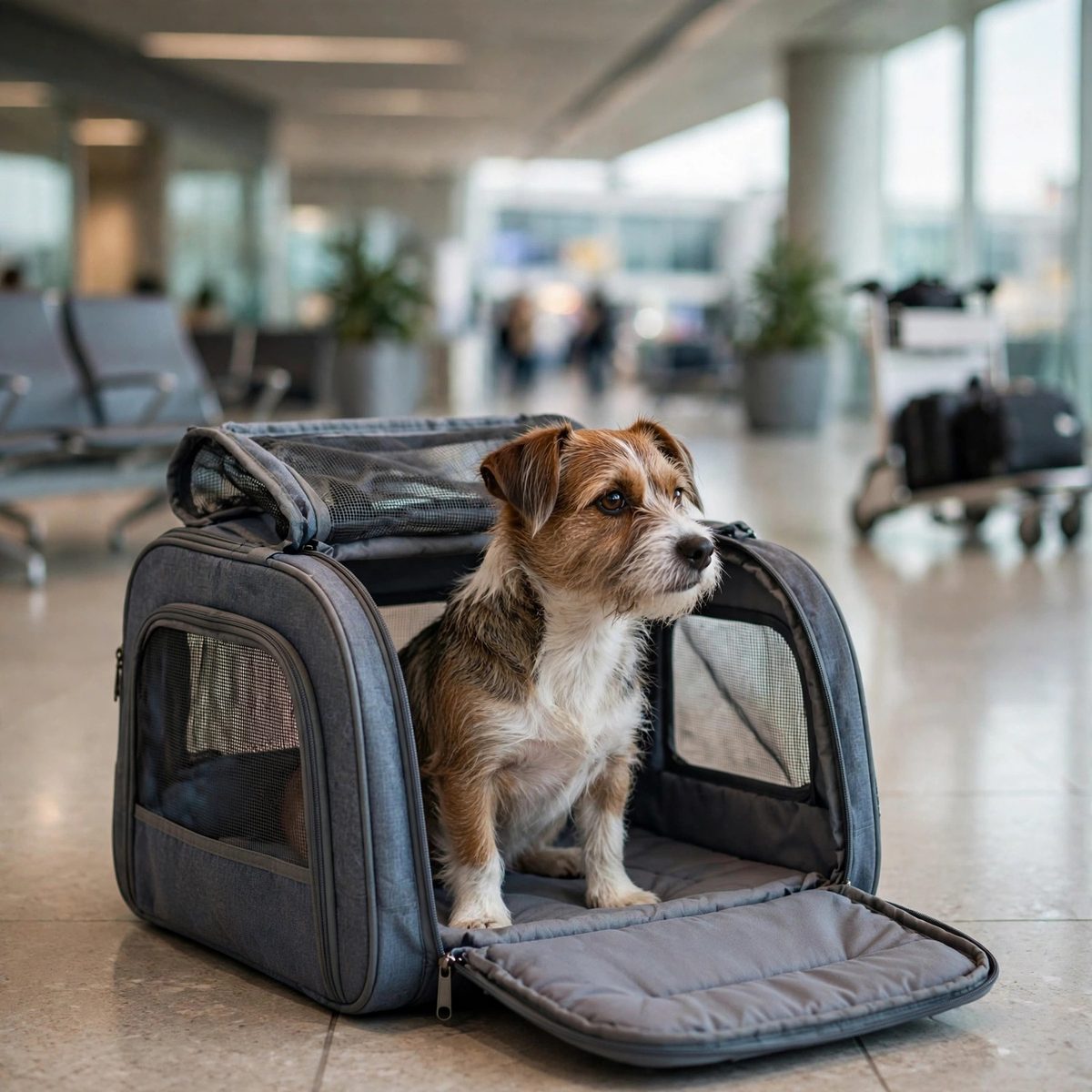
A travel carrier is one of the most-used pieces of gear a traveling dog owner buys. The right one keeps your dog comfortable and contained at the airport, in the car, and at your destination — the wrong one ends up unused in a closet. This guide walks through how to match a carrier to your dog, your trips, and your airline's rules, drawing on the range in our dog travel carriers collection.
Start with your trip type
Carriers are built for different jobs, so begin by listing how you actually travel. If you fly several times a year, cabin compatibility and a low profile matter most. If you mostly drive, a roomier carrier that doubles as a car den may serve you better. Hikers and transit commuters often prefer backpack-style carriers that keep hands free, while frequent flyers moving through large terminals sometimes choose rolling carriers that spare their shoulders. Be honest about your last five trips — the pattern there predicts your next five.
Getting the size right
Sizing is where most carrier purchases go wrong. Measure your dog standing on a flat surface: length from the tip of the nose to the base of the tail, height from the floor to the top of the head (or ears, whichever is taller), and current weight on a scale. Then add a few inches of clearance to the length and height. Your dog should be able to stand without crouching, turn around, and lie down in a natural position.
check those numbers against the listed dimensions on the product page — never eyeball it or assume a "medium" matches your dog. Weight limits matter too: a carrier rated well above your dog's weight will hold its shape better and last longer. For growing puppies, consider an expandable carrier with zip-out panels, like the TrekTails expandable pet carrier, which gives extra room on long layovers without adding bulk in the cabin.
Carrier styles and when each makes sense
Soft-sided carriers
Soft-sided carriers are the go-to for air travel because their flexible walls can compress slightly to fit under seats with tight clearances. Look for a structured base that does not sag, mesh windows on at least three sides for airflow, and both top and front entry zippers so a nervous dog can be loaded either way. The TrailPaw soft-sided dog carrier is a classic example of the form: mesh on three sides, a top-loading zipper, and a padded shoulder strap for terminal walks.
Structured airline-style carriers
Structured carriers hold their shape with light framing, which some dogs find more den-like and reassuring. Interior linings, such as sherpa-style fleece, add comfort on cold cabin floors, and exterior pockets keep documents and a collapsible bowl within reach. The WanderWag airline-style pet carrier follows this pattern with a front mesh door, side pockets, and reinforced carry handles.
Expandable carriers
Expandable carriers add zip-out mesh panels that extend the interior once you are seated and settled — useful on long flights or road trips where your dog will spend hours inside. They weigh slightly more and have more zippers to check, so weigh the flexibility against simplicity.
Backpack carriers
Backpack carriers suit dogs up to small-medium sizes and owners who walk, bike, or use public transit. Ventilation is the priority here: large mesh panels or a bubble-style front window, plus padded straps and a chest strap to distribute weight. They are not ideal for very long flights since the dog cannot lie flat, but for day trips and trailheads they are hard to beat.
Rolling carriers
Rolling carriers with telescopic handles shine in big airports and for owners who cannot comfortably carry weight on a shoulder. Check that the wheels roll smoothly, the handle locks at a comfortable height, and the carrier still fits your airline's dimensions with the wheels included.
Ventilation, entry points, and comfort
Mesh panels do double duty: airflow and visibility. Dogs regulate heat primarily by panting, so generous mesh on multiple sides matters, especially in warm terminals and cars. Entry points shape daily usability more than most buyers expect — a top-loading zipper lets you lower a reluctant dog in gently, while a wide front door works well for confident dogs who walk in on their own. Inside, a removable, washable pad is worth its weight: accidents happen, and a pad that comes out for washing keeps the carrier usable for years.
Materials, cleaning, and everyday practicality
Look for tightly woven outer fabrics that resist snags, reinforced stitching at handle attachment points, and zippers that run smoothly without catching mesh. Water-resistant coatings help with rain dashes and muddy paws. Between trips, vacuum the interior, wipe the base, and store the carrier open with the pad inside so it holds its shape and stays aired out. A quick inspection of straps and buckles before each trip takes a minute and prevents mid-terminal failures.
Before you fly or drive: a quick checklist
- Confirm your airline's current pet policy, fees, and under-seat dimensions — rules change, and the airline's page is the only authoritative source.
- Measure your dog and check against the carrier's listed dimensions and weight limit.
- Let your dog explore the carrier at home for a week before the trip, with treats and short sessions.
- Attach identification to both the carrier and your dog's collar.
- Pack a collapsible bowl, a small water supply, and any medications in your personal bag, not in checked luggage.
- Feed a light meal several hours before travel rather than right before departure.
Choosing with confidence
The right carrier is the one your dog will actually relax in and that fits the trips you take most. Measure carefully, prioritize ventilation and entry points, and verify airline rules directly with your carrier of choice. To check styles side by side, browse our full dog travel carriers collection.