Trail miles, summer heat, rocky ground, and fading light — outdoor adventures ask more of a dog's gear than a neighborhood walk does. The right equipment keeps your dog comfortable, visible, and safe when conditions change. This guide walks through the categories in our outdoor adventure gear collection.
Carrying gear on the trail: dog backpacks
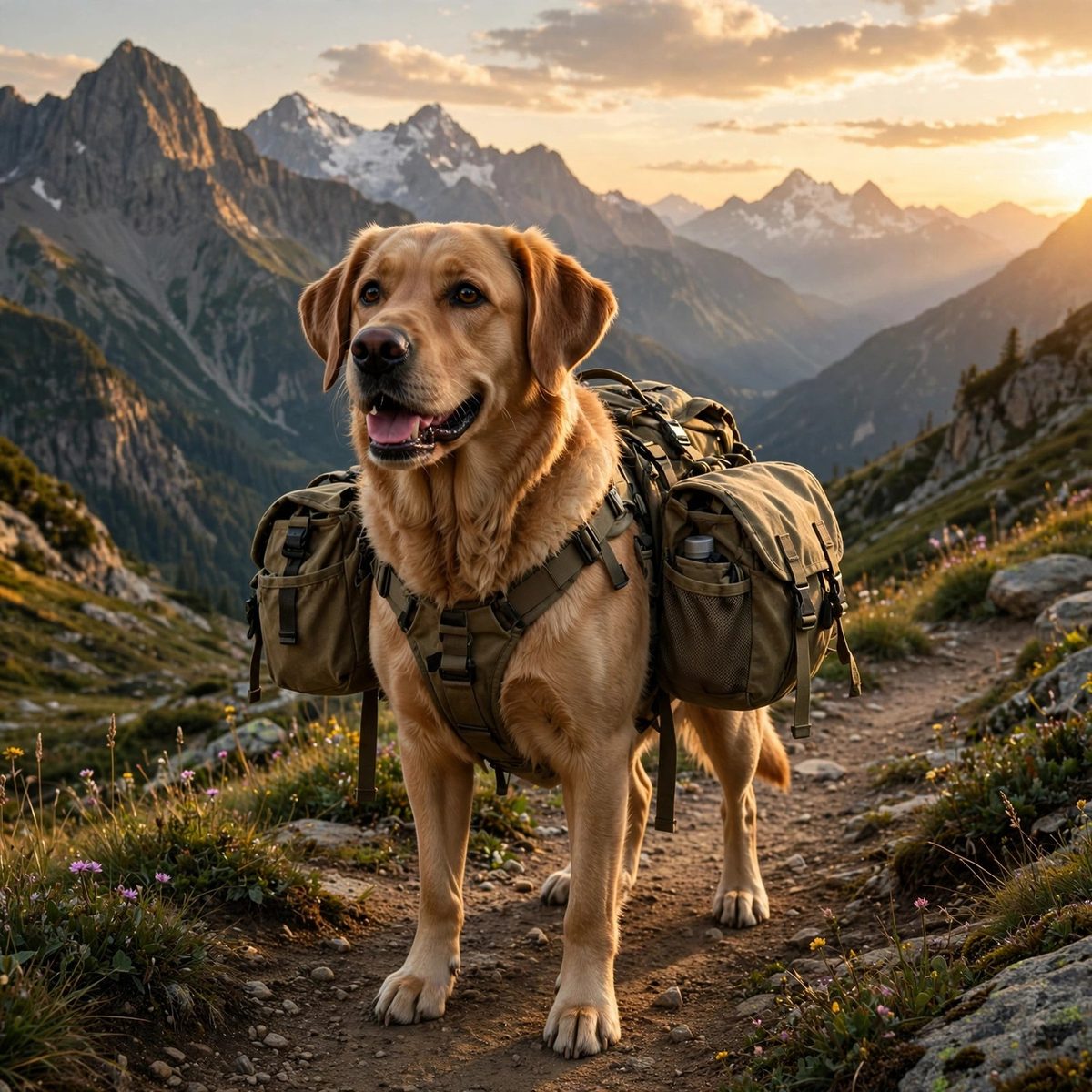
A well-fitted dog backpack lets your companion carry their own water, food, and waste bags, lightening your load and giving working breeds a satisfying job. Fit is everything: the pack should sit centered over the shoulders, not slide side to side, with chest and belly straps snug but not restrictive. The WanderWag dog hiking backpack uses saddlebag pouches, multiple adjustment straps, and a top grab handle for tricky sections. Start with an empty pack on short walks, add weight gradually, and keep the load balanced side to side — a common guideline is to keep total pack weight modest relative to your dog's body weight, and to skip packs entirely for puppies, seniors, or dogs with joint issues unless your veterinarian approves.
Heat management: cooling vests
Dogs overheat faster than people, especially dark-coated, flat-faced, or heavily built breeds. Evaporative cooling vests work by holding water in the fabric; as it evaporates, it draws heat away from the dog's core. The TrekTails evaporative dog cooling vest uses mesh panels and adjustable straps with a leash opening on top. Soak the vest before heading out, re-wet it at water stops, and remember it supplements — not replaces — shade, water, and rest. In high heat and humidity, where evaporation slows, shorten the outing instead of relying on gear alone.
Paw protection: trail boots
Hot pavement, sharp scree, thorny brush, and ice-melt chemicals all punish paws. Trail boots with textured rubber soles and secure ankle straps, like the TrailPaw rugged dog trail boots, protect against abrasion and burns. Expect a comedy phase: most dogs need several short indoor sessions to accept boots, using treats and patience. Check fit on all four paws — rear paws are often smaller — and inspect between the toes after hikes for trapped debris. As a backup, paw balm before outings adds a light protective layer for dogs that will not tolerate boots.
Night visibility
Short days and evening walks put dogs in drivers' blind spots. A light-up collar that glows steadily makes your dog visible from a distance in a way reflective trim alone cannot match. Rechargeable designs avoid the endless battery replacements of older models. Pair the collar with a reflective leash and keep to well-lit routes where possible; visibility gear helps drivers see your dog, but it does not make roads safe, so stay on sidewalks and paths.
Trail first aid
A compact pet first-aid kit belongs in every trail bag: gauze, bandage wraps, antiseptic wipes, tweezers for ticks and thorns, and any of your dog's medications. The TrekTails portable pet first-aid kit organizes 40 pieces in labeled pockets inside a zippered pouch. Before you need it, learn the basics: how to wrap a paw, how to check for ticks, and the location of the nearest emergency veterinarian to your trailhead. Save that clinic's number in your phone before you leave coverage.
Etiquette and safety basics
- Know the leash rules for every trail — many allow dogs only on leash, and some exclude them seasonally to protect wildlife.
- Yield to hikers, horses, and uphill traffic; step aside with your dog close.
- Pack out waste and any trash, including food scraps that habituate wildlife.
- Keep your dog out of fragile meadows, nesting areas, and water sources used for drinking.
- Watch for wildlife and keep recall sharp — a long line is a good compromise where off-leash is allowed but risky.
- Check your dog for ticks, burrs, and hot spots after every outing.
Breaking in new gear before it matters
Every piece of adventure gear needs a trial run at home. Let your dog wear the backpack empty around the house for several short sessions with treats before adding any weight. Practice putting boots on and off until the process is calm and quick — fumbling with unfamiliar straps on a windy trailhead is miserable for everyone. Test the cooling vest's fit over your dog's normal harness, since layering changes how straps sit. Charge the light-up collar fully and check that it is visible from a distance at dusk, not just in a dark room. A thirty-minute dress rehearsal in the backyard reveals fit problems, rubbing points, and missing pieces while you can still fix them easily.
Gear up for the trail
Adventures go better when your dog is as equipped as you are: a fitted pack, cooling for heat, boots for rough ground, light for dark, and first aid for the unexpected. Build the kit around the outings you actually do, break everything in before the big trip, and enjoy the miles together. Explore the full outdoor adventure gear collection.