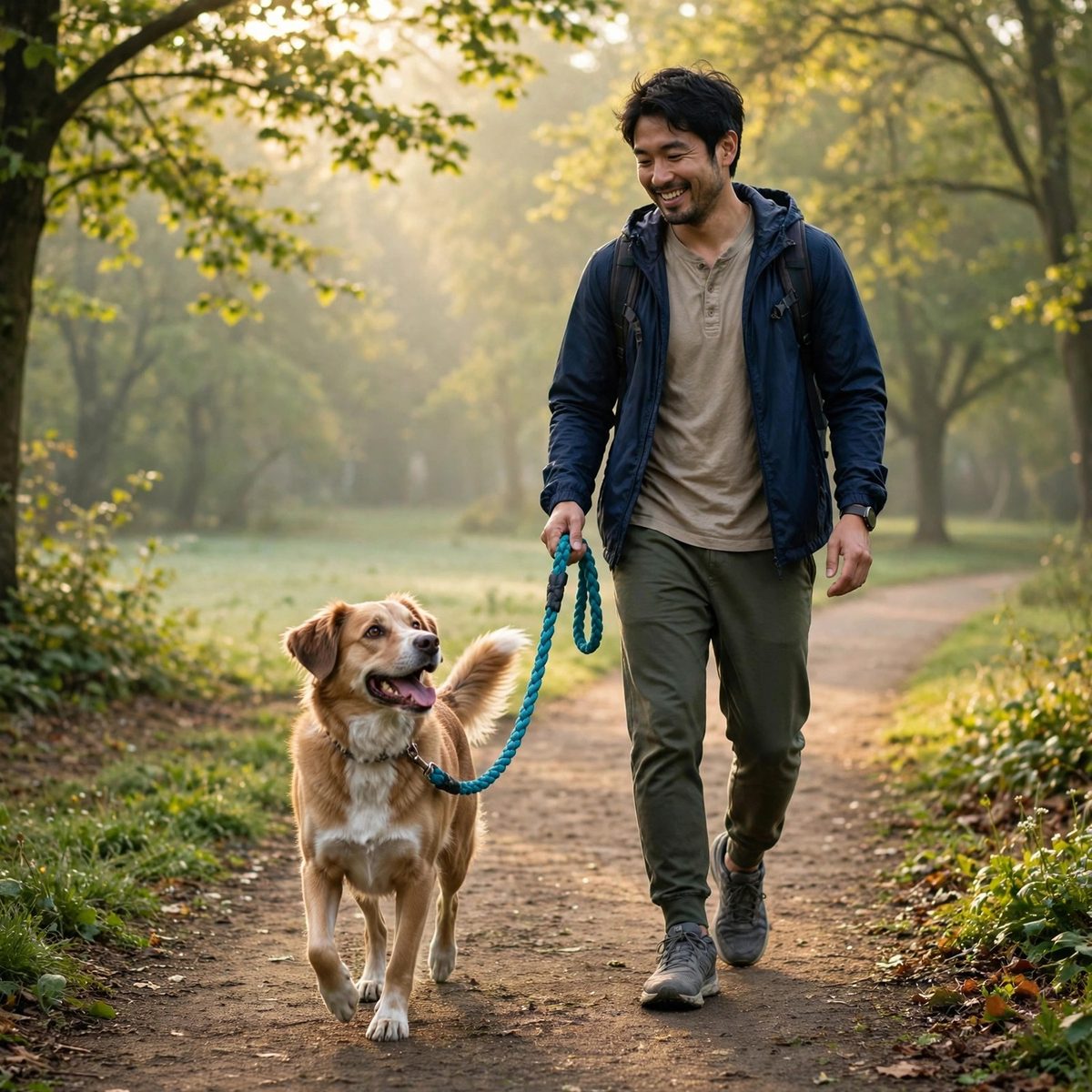
A leash is the most-handled piece of dog gear you own — you will grip it thousands of times a year. The right one disappears into the walk; the wrong one burns your hands, tangles, or fails when it matters. This guide breaks down the choices behind the leashes in our dog walking leashes collection.
Length and where you will walk
Length sets the tone of the walk. Around town, on busy sidewalks, and near traffic, a shorter leash of four to six feet keeps your dog close and gives you quick control. On open trails and in parks, a longer line gives a well-trained dog room to sniff and explore. Leashes around five to six feet are the versatile middle ground most owners use daily — long enough for a natural walking rhythm, short enough to reel in quickly. If you regularly switch contexts, a leash with a second "traffic" handle near the clip, like the WanderWag dual-handle traffic leash, gives you both a relaxed walking length and an instant close-control grip.
Rope, nylon, and bungee materials
Climbing-rope style
Rope leashes, often braided from climbing-style cord, are strong for their weight and comfortable to grip for long walks. Reflective threading woven into the braid adds low-light visibility without extra bulk. The WanderWag reflective rope leash pairs a 6-foot teal braid with a padded handle and a brass snap hook — a classic everyday setup.
Flat nylon webbing
Flat nylon is the workhorse material: affordable, easy to clean, quick to dry, and available in many widths to match dog sizes. Wider webbing suits strong pullers because it spreads pressure across your hand; narrower webbing keeps things light for small dogs. Look for tight, even weaving and reinforced stitching at the handle and clip.
Bungee and shock-absorbing
Bungee leashes include a stretch section that absorbs the jolt of sudden lunges, easing strain on your shoulder and your dog's neck. They are a thoughtful choice for strong, excitable dogs and for jogging, where pace changes are constant. The TrekTails bungee shock-absorbing leash combines a stretch section with reflective stitching and a padded loop handle.
Control features worth having
- Traffic handle: a second padded loop near the clip for close control at crossings, around other dogs, and in crowds.
- Front-clip control loop: on no-pull designs like the TrekTails no-pull front-clip leash, a loop near the chest attachment helps redirect forward momentum during training.
- Hands-free waist option: a belt-style leash such as the TrailPaw hands-free waist leash keeps your hands free for jogging, hiking with poles, or pushing a stroller — with a quick-release buckle for fast separation if needed.
- Padded handle: neoprene or foam padding prevents rope burn and blisters on long walks.
- Swivel clip: a rotating snap hook keeps the leash from twisting as your dog circles.
Reflective details for low light
Many walks happen at dawn, dusk, or after dark. Reflective threading or stitching along the leash catches headlights and streetlights, making both you and your dog more visible to drivers. It is a small feature with an outsized safety benefit — prioritize it if you walk near roads in low light, and pair it with a reflective collar or harness.
Matching the leash to your dog's size and strength
Hardware should scale with the dog. Small dogs do well with slim, lightweight leashes and small clips that do not drag the collar down. Medium and large dogs need wider webbing or thicker rope and robust metal hardware. For strong pullers, prioritize a padded handle, a traffic handle, and a bungee section over decorative details — and pair the leash with a front-clip harness and consistent training rather than expecting the leash alone to fix pulling.
Care and replacement
Rinse muddy leashes and let them air dry; machine washing can weaken stitching over time unless the product page says otherwise. For rope leashes, check the braid for flattened or fuzzy spots that signal internal wear, and inspect where the rope meets the handle and clip — that junction takes the most stress. On bungee leashes, test the stretch section periodically; if it no longer rebounds crisply, the shock absorption is gone. Regularly inspect the clip spring, the stitching at both ends, and any reflective threading for fraying. Retire a leash at the first sign of fraying, a sticky clip, or stretched-out elastic — leash failure almost always happens at the worst moment, and replacement costs far less than the alternative.
Finding your everyday leash
Start from your walks: length for your routes, material for your grip and your dog's strength, and one or two control features that solve your actual problems. A well-chosen leash should feel like an extension of your arm within a week. check the full range in our dog walking leashes collection.