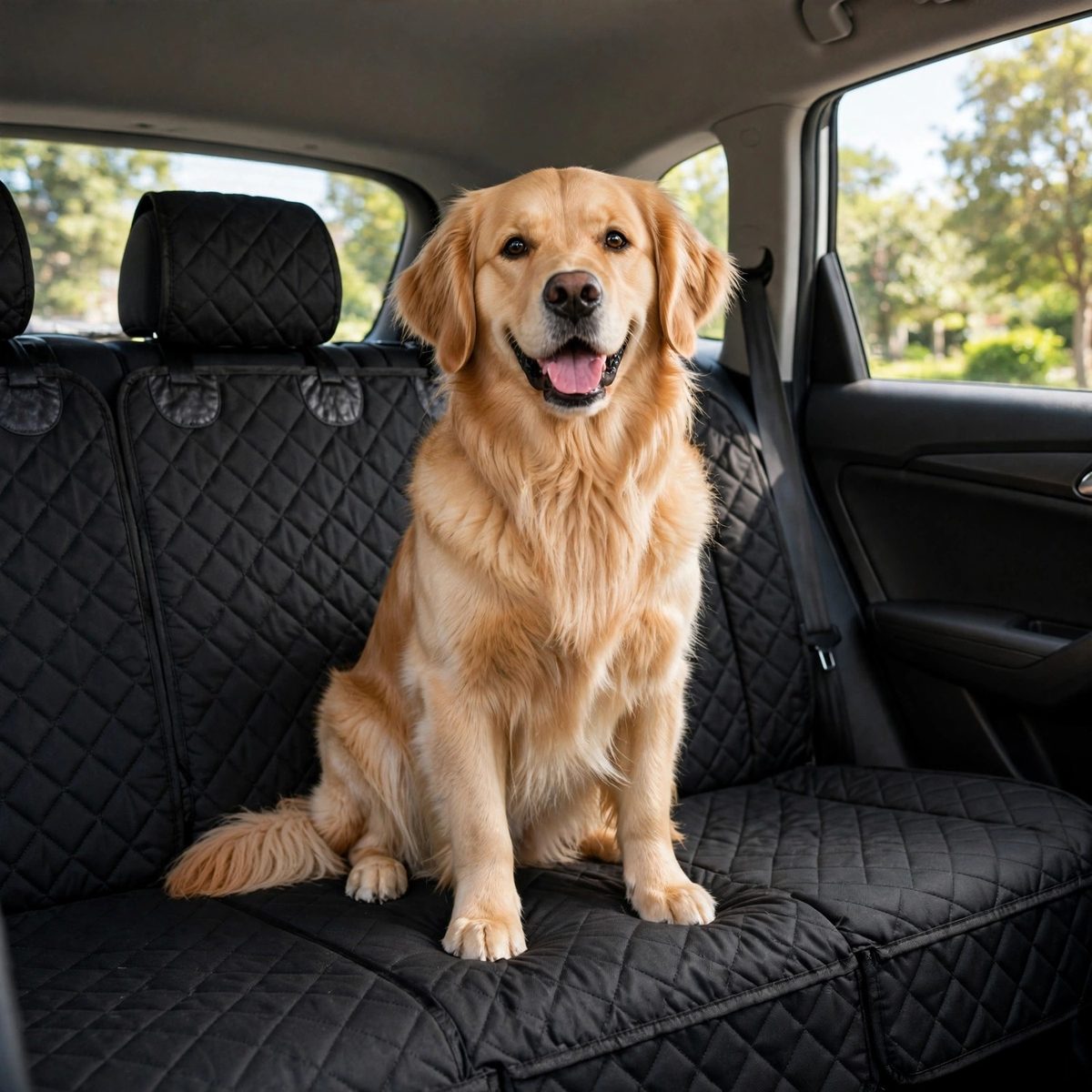
Muddy paws, shedding fur, drool, and scratched leather — dogs are wonderful passengers and terrible upholstery. A good setup protects your car's interior and, just as importantly, keeps your dog safer and calmer on the road. This guide covers the pieces in our car seat and travel safety collection and how to choose among them.
Know your back seat
Start with your vehicle, not the catalog. Measure the width of your back seat, note whether the headrests are removable or fixed, and check where the seatbelt buckles sit. Look at the gap between the front and back seats — that footwell is where small dogs slide and where a hammock-style cover earns its keep. Also note your seat material: leather and vinyl need scratch protection most, while cloth seats mostly need a barrier against hair, moisture, and odor.
Covers, hammocks, and elevated seats
Standard bench seat covers
A quilted bench cover drapes over the seat cushion and backrest, with straps that loop around the headrests and openings that leave seatbelts accessible. The TrekTails quilted dog car seat cover follows this layout, adding side flaps that drape over the seat edges and a non-slip backing to keep the cover from sliding during turns. This style suits most sedans and SUVs and installs in minutes.
Hammock-style covers
Hammocks extend the cover forward, anchoring to the front-seat headrests to create a suspended platform that blocks the footwell gap. Dogs get a larger, level surface; owners get protection for the backs of the front seats as well. The TrailPaw waterproof dog car hammock adds quilted padding for comfort and a center mesh window so air circulates and your dog can see you. Hammocks suit vehicles where the front and rear headrests align reasonably well.
Elevated car seats
Elevated seats are booster-style beds for small dogs: raised walls contain the dog, a plush insert cushions the ride, and straps secure the seat to the vehicle. The raised position lets small dogs see out the window, which often calms anxious travelers. These suit toy and small breeds; larger dogs are better served by a hammock and a restraint.
Restraints: seatbelt adapters and harnesses
A cover protects the car; a restraint protects the dog. Seatbelt adapters clip between your car's seatbelt buckle and a body harness (never a collar) to limit how far your dog can move during sudden stops. The WanderWag seatbelt harness adapter, 2 pack uses adjustable nylon straps with metal clips for this purpose. Pair any adapter with a well-fitted walking harness that distributes force across the chest — and keep the tether short enough that your dog cannot reach the front seat or a window opening.
Door protectors and cargo options
Doors take a beating from excited paws at every stop. Quilted door protectors hang from the window frame with suction cups or hooks and shield the panel and armrest from scratches. For hatchbacks and SUVs, consider the cargo area too: a dedicated cargo liner or a folded blanket over the folded seats protects the largest surface a big dog will use.
Materials: water resistance, grip, and cleaning
Quilted, water-resistant fabrics handle the daily reality of wet dogs and spilled bowls; a non-slip or rubberized backing keeps everything in place on leather seats. Dark colors hide hair and dirt between washes, though they show light-colored fur more. For cleaning, most covers can be shaken out, vacuumed, and wiped down with a damp cloth and mild soap — check the care details on the product page. Machine washing, where supported, should use gentle cycles and air drying to protect waterproof coatings.
Sizing and installation checks
- Measure your back seat's width and check with the cover's listed dimensions.
- Confirm your headrest style matches the strap design (fixed vs. removable vs. none).
- Check that seatbelt openings line up with your buckle positions if passengers will share the seat.
- For hammocks, verify the distance between front and rear headrests is within the adjustable strap range.
- Install before your first real trip and let your dog explore the setup at home.
Traveling with anxious or motion-sensitive dogs
Some dogs pant, drool, or whine in the car. A familiar-smelling blanket on the cover, a consistent seating spot, and short practice drives help more than any product. Feed lightly a few hours before departure, keep the car cool and ventilated, and schedule breaks every couple of hours. If motion sickness is severe or anxiety is extreme, talk to your veterinarian before a long trip.
Putting it together
Most owners end up with a layered setup: a cover or hammock for the upholstery, a restraint clipped to a harness for safety, and door protectors if their dog paws at windows. Build it around your vehicle and your dog's size, install everything before travel day, and do a short test drive. Browse the full car seat covers and travel safety collection to check options.