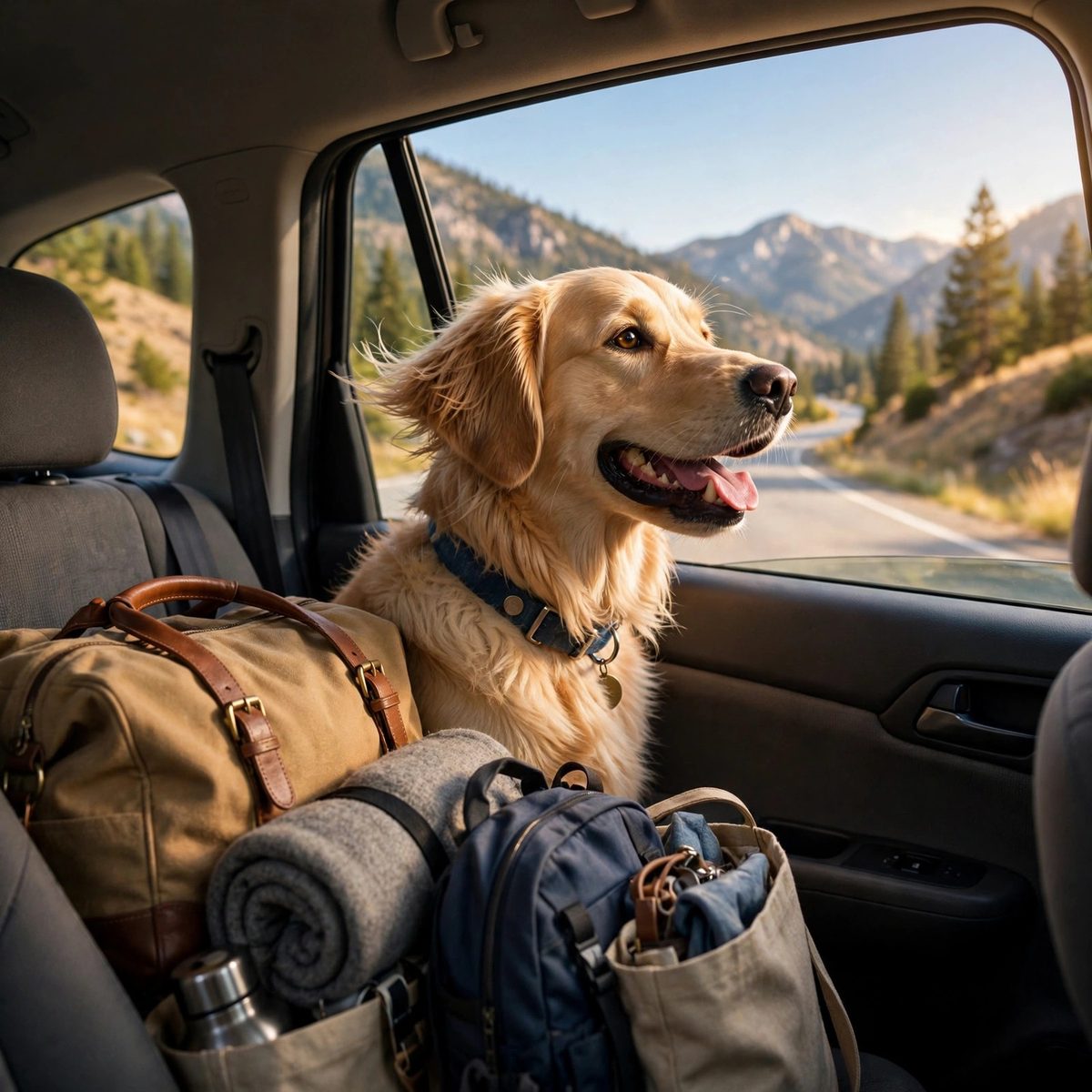
Road trips are the most dog-friendly way to travel — no cargo holds, no size limits, and the freedom to stop whenever your co-pilot needs a break. But a comfortable road trip does not happen by accident. It comes from a safe car setup, a well-packed kit, and a realistic plan for stops, meals, and sleep. This checklist covers all three, whether you are driving two hours or two days.
Setting up the car for safety
Before you pack a single bag, decide where your dog rides and how they are secured. An unrestrained dog becomes a projectile in a sudden stop and a distraction in normal traffic. Your main options: a seatbelt adapter clipped between the car's buckle and a body harness, an elevated car seat for small dogs, or a secured crate in the cargo area. Pair the restraint with interior protection — a quilted cover or hammock over the back seat, like the TrailPaw waterproof dog car hammock, which also blocks the footwell gap so small dogs cannot slide off the seat. Our full car seat and travel safety collection covers covers, restraints, and door protectors together.
Install everything a few days before departure and take a short practice drive. Dogs that have never ridden in a harness or a new seat arrangement need time to accept it — discovering problems at highway speed is not the moment. Keep the car's temperature comfortable and crack ventilation; dogs overheat quickly in still, warm cars even with the air conditioning on low.
The packing checklist
Safety and restraint
- Harness and seatbelt adapter or car seat, already fitted and tested.
- Leash plus a spare — leashes break and get left at rest stops.
- Collar with current ID tags, plus a backup tag in your bag.
Food and water
- Enough of your dog's regular food for the whole trip plus one extra day, in an airtight container.
- Collapsible bowls for food and water — see our travel bowls and feeding collection for packable options.
- A portable water bottle such as the WanderWag portable dog water bottle for rest stops and hikes.
- Treats for rewarding calm behavior in new places.
Comfort and sleep
- A familiar blanket or bed that smells like home — this single item does more for hotel-room settling than anything else.
- Favorite toys or chews for downtime.
- Any medications and supplements, with a few extra doses.
Health and cleanup
- Vaccination records and your vet's phone number, saved in your phone and on paper.
- Waste bags — more than you think you need.
- Towels for muddy paws and wet dogs; pet-safe wipes for quick cleanups.
- A basic first-aid kit with bandage wraps, antiseptic wipes, and tweezers.
Paperwork
- Proof of rabies vaccination — some hotels, parks, and campgrounds ask for it.
- Microchip number and registration details.
- A recent photo of your dog on your phone in case of separation.
Feeding and hydration on the road
Stick to your dog's normal food and schedule as closely as the road allows — dietary consistency prevents most travel stomach upsets. Feed at rest stops rather than while moving, and wait a bit after eating before driving on if your dog is prone to motion sickness. Offer water at every stop; many dogs drink less than usual in new environments, so encourage it. Avoid letting your dog drink from puddles, streams, or communal bowls of unknown cleanliness.
Planning rest stops
Plan to stop every two to three hours for a bathroom break, water, and a short walk or play session. This matches most dogs' comfort limits and keeps everyone fresher. Look for stops with grassy areas away from traffic, and keep your dog leashed — highway rest areas are full of distractions and hazards. A five-minute sniff walk does more to reset a restless dog than an hour of sitting in the car. If your dog is anxious in the car, these breaks are non-negotiable; do not try to power through.
Heat, cold, and weather safety
Never leave your dog alone in a parked car in warm weather — interior temperatures climb to dangerous levels within minutes, even with windows cracked. In summer, plan driving during cooler hours, park in shade, and use sunshades. In winter, remember that small, short-coated, and senior dogs chill quickly at rest stops; a coat and a warm blanket in the car help. Check the forecast for your whole route, not just your destination, since mountain passes and deserts create their own conditions.
Hotels, rentals, and campgrounds
Confirm pet policies before booking — "pet-friendly" ranges from genuinely welcoming to grudgingly tolerant with steep fees. Ask about weight limits, the number of dogs allowed, fees per night, and whether dogs can be left alone in the room. Bring the familiar bed, keep your dog off hotel bedding, and do a quick sweep of the room for hazards (medications, cleaning products, accessible trash) before letting your dog explore. At campgrounds, know the leash rules and wildlife precautions in advance.
If something goes wrong
Before you leave, save the number of an emergency veterinarian near your destination and note clinics along your route. Know the signs that need prompt care: repeated vomiting, difficulty breathing, extreme lethargy, suspected ingestion of something toxic, or any injury with significant bleeding. A calm, prepared owner who knows where to go handles emergencies far better than one searching frantically at midnight.
Multi-day trips: routine and downtime
On longer trips, routine becomes your most valuable tool. Feed at the same times each day, walk before breakfast and after dinner as you would at home, and keep bedtime consistent. Dogs find unfamiliar places far less stressful when the day's rhythm feels familiar. Build in real downtime — not every waking hour needs to be an activity. A tired dog that never fully rests gets cranky, just like a tired person. If you are visiting friends or family, brief your hosts on your dog's needs (feeding times, door-dashing tendencies, furniture rules) before you arrive; a little communication prevents most guest-dog friction. And keep one "buffer" day in your plan with nothing scheduled, so a delayed departure or a dog that needs an extra rest day does not cascade into stress.
Traveling with more than one dog
Multiple dogs multiply both the joy and the logistics. Each dog needs their own restraint, their own space in the car, and their own food and water setup — sharing sounds efficient until one dog resource-guards in a confined space. Walk them separately at rest stops if they get overexcited together, or use a double-leash setup only if both dogs are well-trained on it. Pack a spare leash and collar per dog, since the chance of losing one scales with the pack. In hotels, confirm the property's limit on the number of dogs per room before booking, and bring familiar bedding for each dog so nobody competes for the one good spot.
Hit the road ready
A great road trip with your dog is simply good planning executed calmly: a safe, tested car setup, a complete kit packed once, regular stops, and realistic expectations. Do the setup work before departure day and the miles take care of themselves. Start with the car: browse our car seat and travel safety collection to build your rig.