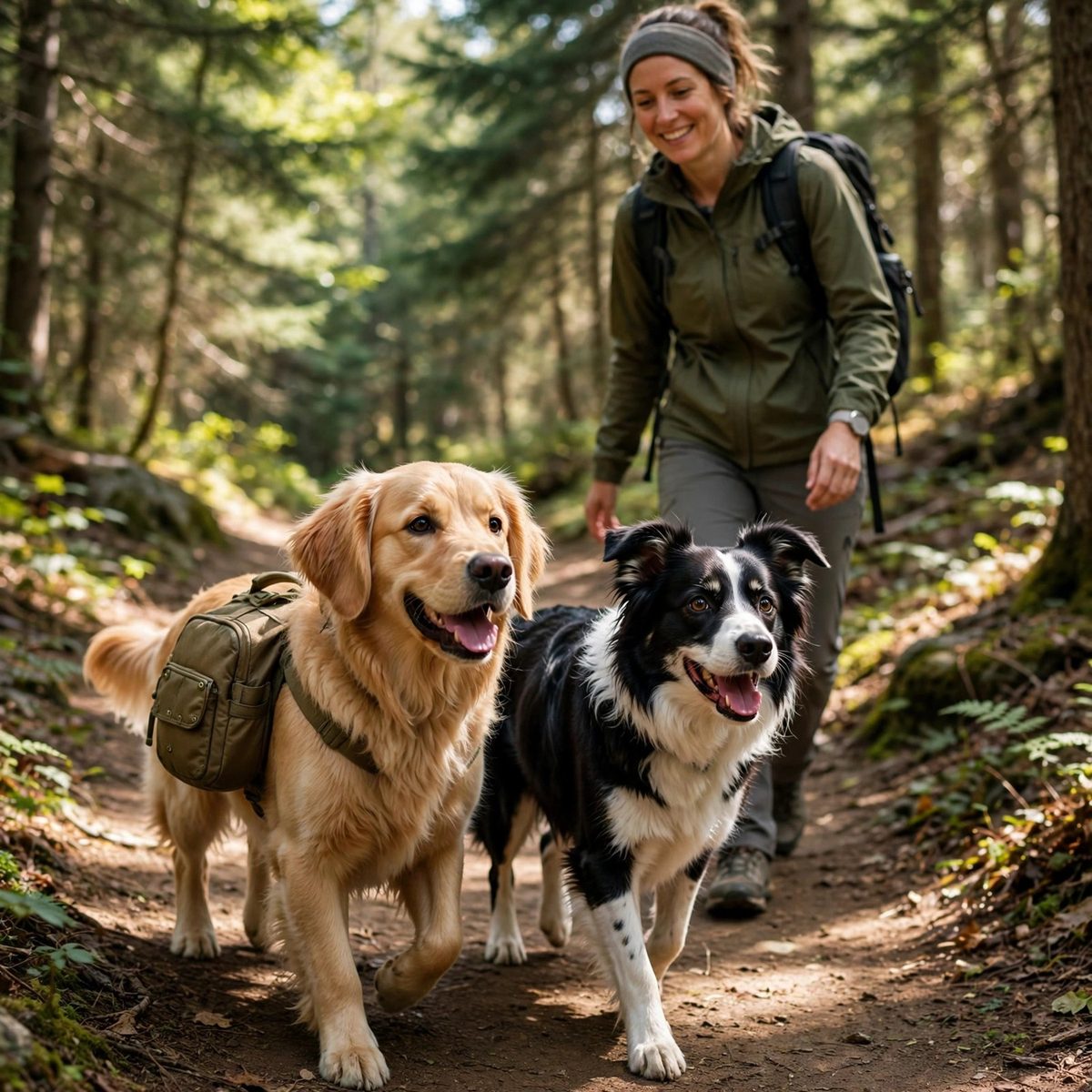
A dog on a trail is happiness in motion — but trails ask more of dogs and owners than neighborhood walks do. Distance, elevation, heat, wildlife, and trail rules all shape the outing. With the right gear, a realistic plan, and good etiquette, hiking becomes one of the finest things you and your dog do together. This guide covers all three.
Is your dog ready for the trail?
Not every dog is built for every hike, and honesty here prevents misery. Consider age: puppies' growing joints should not take long, repetitive miles — check with your vet about when to start. Consider fitness: a couch dog needs weeks of progressively longer walks before attempting real elevation. Consider breed and build: flat-faced breeds struggle in heat, giant breeds wear joints faster, and tiny dogs chill quickly at altitude. Start with short, easy trails and build up; a dog that finishes energetic and eager is ready for more, while one that lags or lies down is telling you to scale back.
Essential trail gear
- Leash and collar/harness with ID: a sturdy 6-foot leash plus a collar with current tags. Even where off-leash is allowed, carry the leash — you will need it at trailheads, junctions, and encounters.
- Water and a bowl: more than you think. Dogs cannot ration, and streams may be dry or unsafe. A collapsible bowl and a generous supply from home is the baseline.
- Food and treats: extra calories for the effort, plus high-value treats for recall around distractions.
- Dog backpack: a fitted pack like the WanderWag dog hiking backpack lets your dog carry their own water and supplies. Introduce it empty on short walks first, add weight gradually, and keep loads balanced.
- Paw protection: boots such as the TrailPaw trail boots for hot, sharp, or rough terrain — broken in at home before the hike.
- First-aid kit: a portable kit like the TrekTails portable pet first-aid kit with bandage materials, antiseptic wipes, and tweezers, plus any of your dog's medications.
- Waste bags: pack out everything, even far from the trailhead.
- A towel: for muddy paws, surprise water crossings, and the ride home.
For the full range, browse our outdoor adventure gear collection.
Paws, heat, and weather
Paws take the beating on trails. Hot rock and sand burn pads quickly — if the ground is too hot for your hand, it is too hot for paws. Sharp scree and thorny brush cut them. Boots solve most of this, but they need a break-in period; start with short indoor sessions and treats. Without boots, check pads at rest stops and turn back at the first sign of limping or licking.
Heat is the bigger danger. Dogs overheat far faster than hikers, and the signs — excessive panting, drooling, glazed eyes, stumbling — can escalate quickly. Hike in cooler hours, choose shaded or high-elevation routes in summer, and carry more water than your plan requires. A cooling vest, soaked before you set out and re-wet at water stops, helps manage core temperature on warm days. In cold or wet weather, short-coated and small dogs may need an insulating layer, and everyone needs a dry place to rest.
Water and food on the trail
Offer water at regular intervals rather than waiting for your dog to ask — by the time a dog looks desperate, they are already behind. Do not rely on streams and lakes: they can be dry, contaminated with agricultural runoff, or host parasites and blue-green algae that are dangerous to dogs. If you must use natural water, know how to treat it. Feed a normal meal before the hike (not immediately before — allow digestion time) and bring calorie-dense snacks for longer outings. Stick to familiar foods; trail day is not the time for dietary experiments.
Wildlife, livestock, and other trail users
Wildlife encounters are a highlight of hiking and a risk to manage. Keep your dog close in areas with bears, moose, coyotes, or rattlesnakes — a chasing dog can provoke exactly the confrontation you want to avoid, and can also bring an angry animal back to you. In livestock country, an uncontrolled dog can panic herds and create serious liability; many grazing areas require dogs on leash by law. Make noise in bear country, give horses a wide berth (ask the rider how to pass), and step aside for uphill hikers with your dog held close.
Trail etiquette
- Know the rules: check leash requirements and dog restrictions before you go — they vary by park, season, and trail, and rangers do enforce them.
- Yield generously: your dog should be at your side, not lunging at the edge of the leash, when others pass.
- Control greetings: not every hiker — or every dog — wants to meet yours. Ask before allowing approaches.
- Pack out waste: bag it and carry it. Leaving bags "to grab on the way back" is littering with extra steps.
- Stay on trail: cutting switchbacks and trampling meadows damages the landscape everyone came to see.
- Minimize noise: a constantly barking dog ruins the experience for wildlife watchers and solitude seekers alike.
After the hike
Do a full body check: run your hands over your dog feeling for ticks (ears, armpits, groin, between toes), remove burrs and foxtails, and check pads for cuts or swelling. Offer water and a meal, then let them rest — tired dogs sleep deeply, which is normal. Watch for limping, hot spots, or unusual lethargy over the next day. Clean your gear, air out boots and packs, and restock the first-aid kit and waste bags so the next outing starts ready.
Daypacks and organization
Keeping trail gear organized makes spontaneous hikes possible. A dedicated day-trip pack, such as the WanderWag pet day-trip backpack from our pet travel bags collection, keeps bowls, water, treats, waste bags, and first aid in one place between outings — grab it and go.
Seasonal considerations
Spring brings mud, swollen streams, and wildlife with young — keep dogs leashed near nesting areas and be ready for messy paws. Summer demands early starts, abundant water, and honest heat assessment; when in doubt, choose a shorter shaded route or skip the hike. Fall offers ideal temperatures but shorter days, so carry a light source and plan to finish well before dusk. Winter hiking is wonderful for cold-loving breeds but punishing for small or short-coated dogs — watch for shivering, lifted paws on snow, and ice balls forming between toes, and keep outings shorter. Year-round, check trail conditions and closures before you leave; a washed-out trail or a fire restriction changes the plan more than any gear choice. Local ranger stations and park websites usually post current conditions, and a two-minute check beats a wasted drive to a closed trailhead. Conditions change fast in the mountains, so recheck the morning you leave.
Earn the summit together
Great hiking partners are made, not born: fitness built gradually, gear broken in before it matters, and manners practiced until they are automatic. Put in that groundwork and the trail gives back tenfold. Gear up with our outdoor adventure gear collection and we will see you out there.