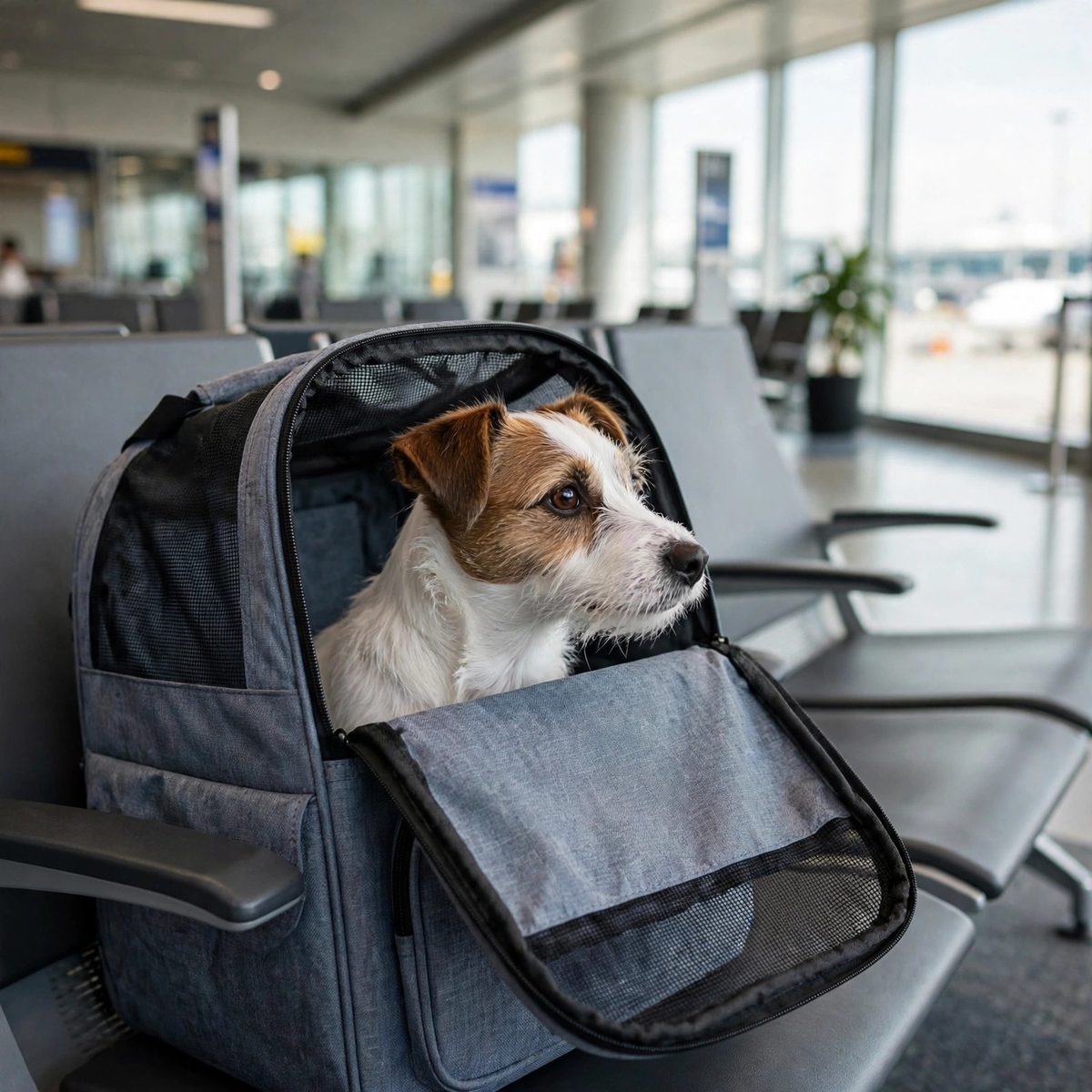
Bringing your dog on a flight takes more planning than booking your own seat — but thousands of dogs fly safely every day, and with the right preparation yours can too. The three decisions that shape everything are whether your dog flies in the cabin or as cargo, which airline you choose, and which carrier you use. This guide walks through each one, with practical steps from booking to baggage claim.
Cabin vs. cargo: the core decision
Most airlines allow small dogs to travel in the cabin in a carrier that fits under the seat in front of you. Cabin travel keeps your dog with you, in a temperature-controlled environment, and is widely considered the lower-stress option. The trade-off is size: your dog must fit comfortably in an under-seat carrier, and most airlines set weight limits that effectively restrict cabin travel to small dogs and puppies.
Larger dogs typically travel as checked baggage or manifest cargo in a ventilated crate in the aircraft's hold. The hold is pressurized and temperature-controlled on most modern aircraft, but the experience involves more handling, more waiting, and more variables. Some airlines restrict cargo pet travel during extreme heat or cold, and certain breeds — especially flat-faced breeds — face additional restrictions or outright bans because of breathing risks. If your dog falls in the middle, check airlines: their size cutoffs, fees, and rules differ enough that the "right" airline can change the answer.
Researching airline pet policies
Airline pet policies are not standardized, and they change. Before you commit to anything, read the current pet travel page of every airline you are considering. Key details to check:
- Maximum carrier dimensions for cabin travel (length, width, and height — all three matter).
- Weight limits, and whether the limit includes the carrier or just the dog.
- Pet fees each way, which are charged per segment and add up on connections.
- Limits on the number of pets per flight and per passenger — popular routes fill pet spots early.
- Breed restrictions for both cabin and cargo travel.
- Health certificate and vaccination requirements, including how recent the certificate must be.
- Rules for layovers: some airlines will not accept pets on itineraries with long connections or plane changes.
- Seasonal embargoes on cargo pet travel during hot or cold months.
After reading the policy, call the airline. Website pages lag behind operational changes, and a phone agent can confirm pet spot availability on your specific flights — which you should do before booking, since pet spots are limited and sell out.
Choosing the right carrier for the flight
For cabin travel, soft-sided carriers dominate because their flexible walls compress slightly to fit under seats with tight clearances. Look for mesh ventilation on at least three sides, a structured base that will not sag, and both top and front entry zippers. The TrailPaw soft-sided dog carrier is built around exactly this use case, while the WanderWag airline-style pet carrier adds a structured shape with a sherpa-style lining and exterior pockets for documents and a collapsible bowl. If your itinerary includes long layovers, an expandable design gives your dog extra room once you are settled at the gate.
Whatever you choose, measure your dog and check against the carrier's listed dimensions — and then check the carrier against your airline's published limits. Leave margin on every side. A carrier that technically fits but leaves your dog crammed for six hours is a welfare problem, not a solution. For a detailed walkthrough, see our dog travel carriers collection and the measuring advice in our carrier sizing guide.
Booking your dog's spot
Book early and book by phone or through the airline's pet reservation process — most airlines do not allow pet reservations through standard online checkout. Confirm the pet fee, the carrier dimensions on record, and any required documentation. Choose nonstop flights whenever possible: every connection multiplies handling, waiting time, and the chance of disruption. If a connection is unavoidable, allow generous layover time and confirm the airline's policy on pets during plane changes. Avoid the last flight of the day when you can, since rebooking options shrink if something goes wrong.
Health certificates and paperwork
Most airlines require a health certificate issued by a licensed veterinarian within a set window before travel — commonly 10 days, though it varies. Your vet will confirm your dog is fit to fly and that vaccinations, especially rabies, are current. International travel adds layers: destination countries set their own import rules, which can include microchips, blood tests, and waiting periods measured in weeks or months. Start researching international requirements at least two to three months out, and use official government sources rather than forum posts.
Preparing your dog in the weeks before
A carrier should never be a surprise on travel day. Set it up at home two to three weeks ahead, leave the door open, and make it rewarding: meals inside, favorite toys inside, calm praise for choosing to enter. Progress to short zipped sessions, then to carrying the closed carrier around the house, then to short car rides in it. The goal is a dog that walks into the carrier voluntarily and settles — that single behavior does more for flight-day calm than any product.
Maintain normal exercise in the days before the flight; a well-exercised dog settles faster. Do not try new foods, treats, or medications in the travel window. If your dog has severe anxiety, discuss options with your veterinarian well in advance — never sedate a dog for air travel without explicit veterinary guidance, as sedation can affect breathing and balance at altitude.
Airport day: a step-by-step approach
- Feed a light meal four to six hours before departure, not right before — a full stomach plus stress is a recipe for nausea.
- Exercise your dog thoroughly before leaving for the airport: a long walk and a bathroom break.
- Arrive earlier than you would solo; pet check-in takes longer.
- Use pet relief areas before security — most large airports now have them post-security too.
- At security, you will carry your dog through the metal detector while the empty carrier goes through the X-ray. Keep a firm grip and a short leash.
- Once at the gate, offer water in small amounts and let your dog settle in the carrier before boarding.
During the flight
In the cabin, the carrier stays under the seat in front of you for taxi, takeoff, and landing; on many airlines it must remain there for the whole flight. Resist opening the carrier mid-flight — a loose dog in a cabin is a safety issue. Offer small amounts of water if the flight is long, speak calmly, and keep your own demeanor relaxed; dogs read their owners closely. For cargo travelers, confirm at check-in where and when to drop off and pick up, and head to the designated area promptly on arrival.
Arriving and settling in
Head for a bathroom break as soon as you can after landing, then offer water. Expect your dog to be tired, thirsty, and possibly a little off — this is normal after a strange day. Keep the first evening low-key: a short walk, a normal meal, and rest. Most dogs bounce back within a day. If anything seems wrong — persistent vomiting, lethargy beyond a day, or breathing difficulty — contact a veterinarian promptly.
Fly prepared
Successful flights with dogs come down to three things: the right airline for your dog's size, a carrier that genuinely fits both dog and under-seat space, and preparation that starts weeks before departure. Do the research, make the calls, and practice the carrier routine at home. Browse our dog travel carriers collection to find the right fit for your next trip.