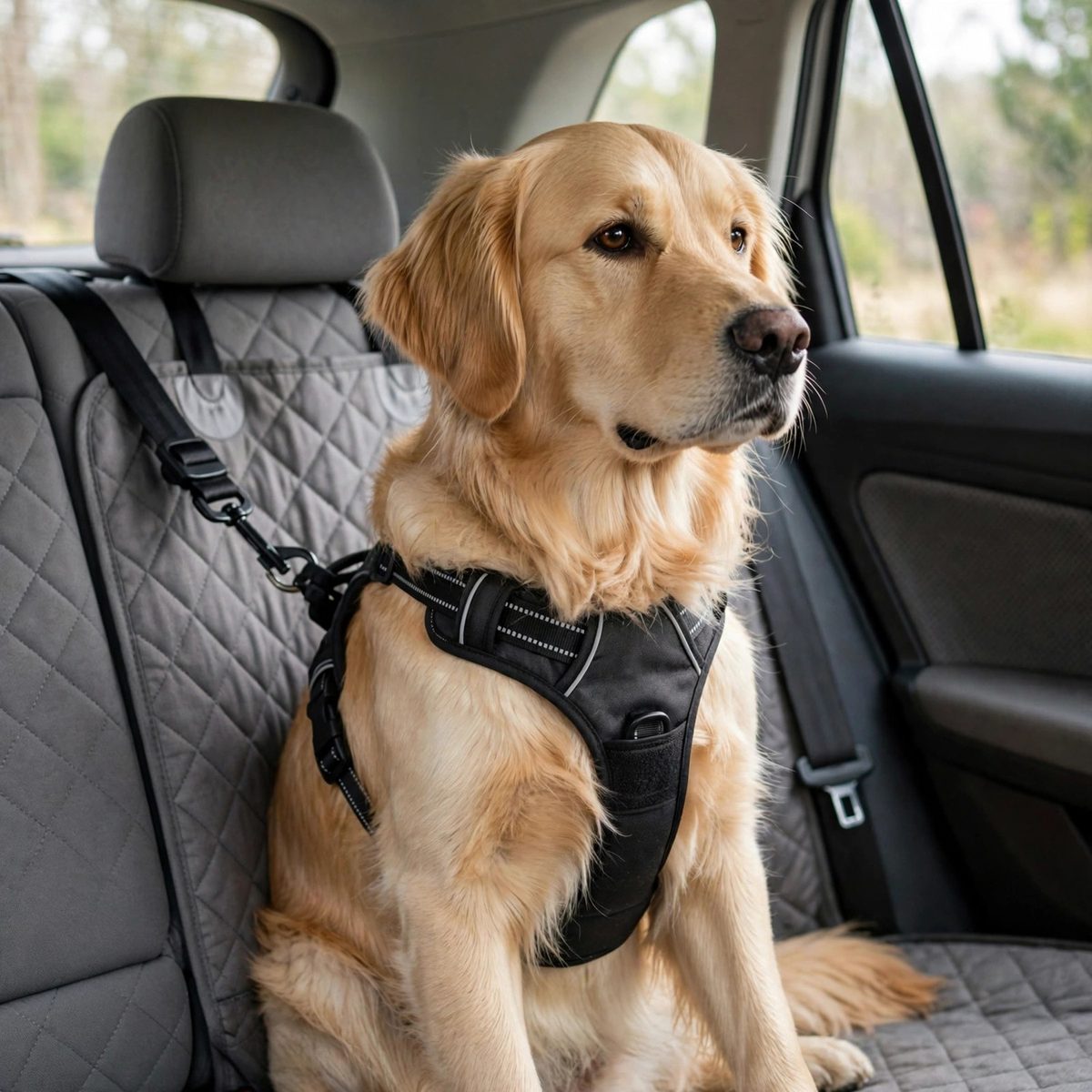
Most dogs ride in cars regularly, yet car safety is where even devoted owners cut corners — a loose dog on a lap, a head out the window at highway speed, a quick trip where "it's just around the corner." The physics do not care about the distance. This article covers why restraint matters, what the law says, which restraint options exist, and the habits that keep every drive safer.
Why an unrestrained dog is dangerous
In a sudden stop or collision, an unrestrained dog becomes a projectile — a 50-pound dog in a 30-mph stop can exert forces equivalent to well over a thousand pounds. That endangers the dog, the driver, and every passenger. Beyond crashes, loose dogs cause the everyday kind of danger: climbing into the driver's lap, blocking pedals, barking at passing dogs, or bolting out an opened door into traffic. Restraint is not about restricting your dog's fun; it is about making the car predictable for everyone inside it.
Restraint options checked
Seatbelt harness adapters
A seatbelt adapter clips between your car's seatbelt buckle and a body harness, allowing the dog to sit, stand, or lie down within a limited range. The WanderWag seatbelt harness adapter uses adjustable straps with metal clips for this setup. Critical detail: always clip to a well-fitted body harness, never to a collar — in a sudden stop, collar attachment concentrates force on the neck. Keep the tether short enough that your dog cannot reach the front seat, an open window, or the door handle.
Elevated car seats
For small dogs, an elevated seat like the TrailPaw elevated dog car seat combines containment with a view: raised bolster walls keep the dog in place while the height lets them see out, which often calms anxious small breeds. The seat itself straps to the vehicle, and the dog clips to the seat's internal tether via a harness.
Crates
A sturdy crate secured in the cargo area or back seat is the most contained option and suits anxious dogs that settle most readily in a den, as well as multi-dog households. The crate must be secured so it cannot slide or tip — an unsecured crate is barely better than no crate. Ensure ventilation and never stack items on top.
Barriers
Barriers that separate the cargo area or back seat from the front keep dogs out of the driver's space but do not restrain them within their zone. They are a useful supplement to, not a replacement for, a harness, seat, or crate.
What the law says about dogs in cars
Rules vary widely, which is exactly why you should check rather than assume. A growing number of states have laws addressing unrestrained pets, distracted driving involving animals, or dogs riding in open truck beds — and the specifics, penalties, and enforcement differ from state to state and change over time. Some jurisdictions treat a loose pet under general distracted-driving or animal-cruelty statutes rather than a pet-specific law. Because this landscape shifts, look up the current rules for your state and any state you will drive through before a trip, using official state legislature or DMV sources. A quick check takes minutes and removes all doubt before a long drive. When in doubt, restrain — the safest legal position is also the safest physical one. Our car seat and travel safety collection brings the restraint and protection options together in one place.
The open-window question
Dogs love hanging their heads out the window, and owners love watching it. The risks are real, though: debris strikes to the eyes, ears, and nose at speed; the chance of a dog jumping or falling from a moving vehicle; and sudden lunges at passing stimuli. If your dog enjoys the breeze, crack the window just enough for the nose and keep the dog restrained on a short tether. Eye injuries from road debris are more common than most owners realize, and they are entirely preventable.
Heat: the deadliest car hazard
A parked car in sun becomes lethal with shocking speed — interior temperatures can climb 20 degrees in ten minutes even with windows cracked, and cracking windows does not meaningfully slow the rise. Dogs cool mainly by panting, which fails in superheated, still air. The rule is absolute: never leave your dog alone in a parked car in warm weather, not for "just a minute." In summer, plan errands and stops around the dog: drive-throughs instead of walk-ins, shaded parking, and a travel companion who stays with the dog. Know the signs of heatstroke — heavy panting, drooling, glazed eyes, vomiting, collapse — and get to a veterinarian immediately if you see them; cool with water on the way, but do not delay professional care.
Puppies, seniors, and anxious travelers
Puppies need short, positive car experiences before long trips — build up from around-the-block drives with rewards. Senior dogs may need help getting in and out; a ramp or a lift reduces joint strain, and a supportive bed in their spot eases achy joints. Anxious dogs benefit from routine: the same spot, the same blanket, calm departures without dramatic goodbyes. For severe anxiety or motion sickness, talk to your veterinarian — there are medical options, but they need to be tested before travel day, not started on it.
Everyday safety habits
- Restrain on every trip, including the two-minute drive — most crashes happen close to home.
- Feed lightly a few hours before driving, not right before, to reduce motion sickness.
- Keep a leash on or within reach before opening any car door.
- Lock windows your dog can operate with a nose or paw.
- Keep the car cool and ventilated; heat builds fast even on mild days.
- Stop every couple of hours on long drives for water, bathroom, and movement.
- Protect the interior with covers like the TrekTails door protector set so safety gear stays pleasant to use long-term.
- Never transport a dog in an open truck bed — restraint laws in many places specifically prohibit it, and the danger is obvious.
Securing gear and cargo around your dog
Restraint is only half the car-safety picture — the other half is everything else in the vehicle. Heavy items like coolers, crates, and luggage should be secured low and, where possible, behind a barrier or in a closed cargo area, because in a sudden stop they move with the same physics that endangers an unrestrained dog. Keep small hazards out of reach: food bags, medications, and trash with bones or wrappers belong in closed containers, not on seats a curious nose can reach. If your dog rides in the cargo area, make sure nothing can topple onto them and that ventilation reaches the space. A tidy, secured car protects the dog even when the restraint is doing its job.
Make safety automatic
The safest car setup is the one you use without thinking: the harness by the door, the adapter already buckled, the cover already installed. Build the habit once and every drive gets safer by default. Go over the options in our car seat and travel safety collection and set your car up before your next trip.