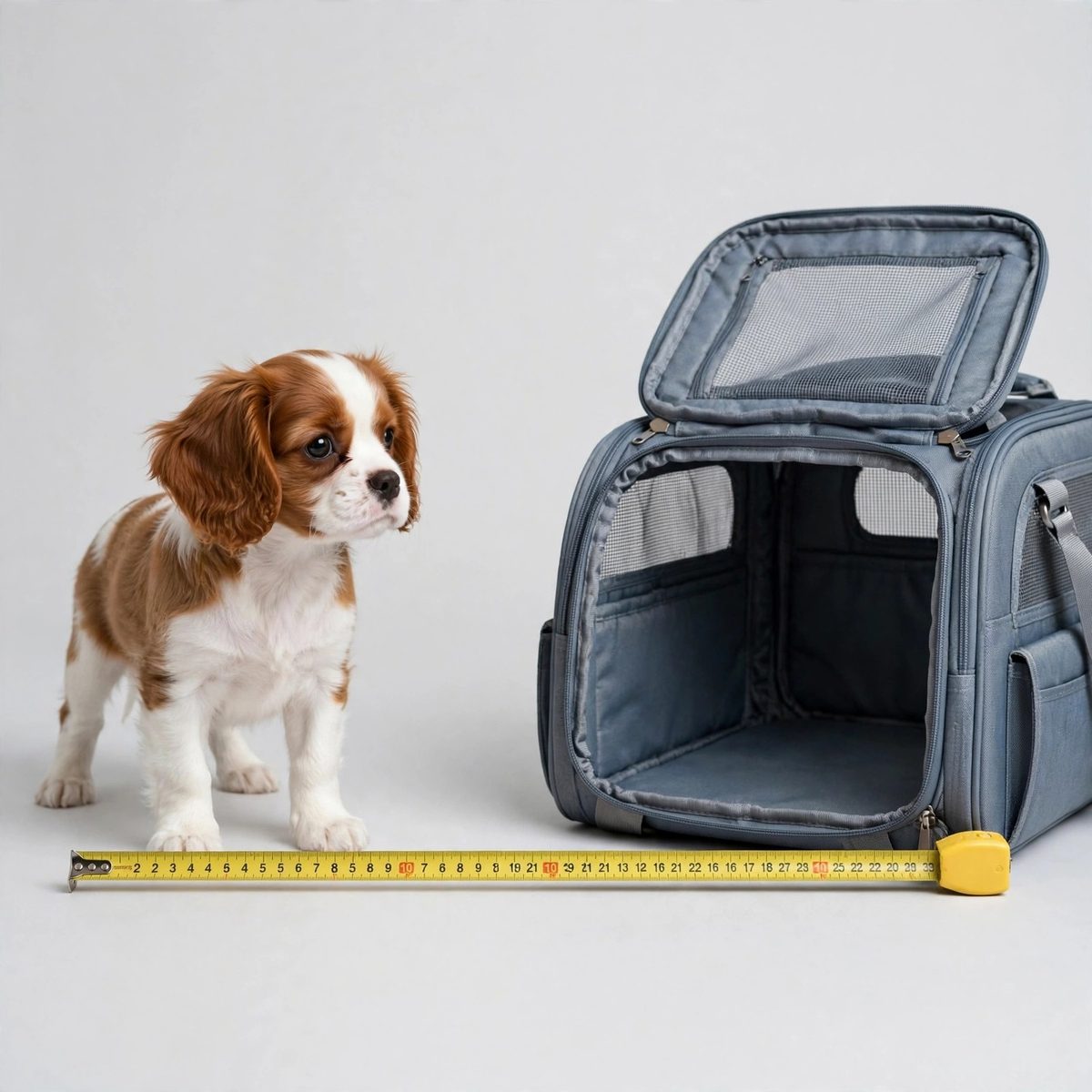
Carrier sizing is the single most common reason travel carriers get returned. Too small and your dog is miserable; too large and the carrier fails its job — especially under an airplane seat, where every inch counts. The good news: getting the size right takes ten minutes with a tape measure and a scale. This guide shows you exactly how.
Why size matters so much
A carrier is a small, enclosed space your dog may spend hours in. The right size lets your dog stand without crouching, turn around freely, and lie down in a natural curled or stretched position. That freedom of movement is not a luxury — it is how dogs settle and sleep. An undersized carrier causes stress, overheating (less air circulates around a crammed dog), and refusal to enter next time. An oversized carrier, meanwhile, may not fit under an airline seat, slides around in the car, and fails to feel den-like and secure. Both directions are worth avoiding.
What you will need
- A flexible tape measure (a rigid ruler works for height but not for length around the body).
- Your dog's current weight — from a vet visit, a pet store scale, or a bathroom scale (weigh yourself, then weigh yourself holding the dog, and subtract).
- A helper, ideally — one person to keep the dog standing naturally, one to measure.
- Treats to reward calm standing.
Step 1: Measure length
With your dog standing squarely on a flat surface — all four paws under the body, head in a natural position — measure from the tip of the nose to the base of the tail (where the tail meets the body, not the tail tip). This is the back-length measurement most size charts reference. Write it down in inches. If your dog will not stand still, measure while they are sniffing a treat held at nose height in front of them — the stretched posture this creates is actually close to the functional length that matters in a carrier.
Step 2: Measure height
Measure from the floor to the top of your dog's head. If the ears stand taller than the top of the skull, measure to the ear tips instead — use whichever is taller. This is the measurement people most often underestimate, especially with prick-eared breeds. A dog that fits lengthwise but has to duck will not settle.
Step 3: Measure width and weight
Width matters less for most carriers but is worth noting for broad-chested breeds: measure across the widest point of the chest or shoulders. Then confirm current weight. Weight limits on carriers are structural — exceeding them means sagging bases, strained zippers, and handles that fail. Choose a carrier rated comfortably above your dog's weight, not exactly at it.
Step 4: Add clearance and check
Add two to three inches to your dog's length and height measurements. This is your target interior space — the room your dog needs to shift positions. Now check against the carrier's listed interior dimensions on the product page, not the exterior: thick padding and structured walls can eat an inch or more on each side. If you are between sizes and the carrier is for car travel, size up; if it is for cabin air travel, check the airline's limits first, since the airline's maximum under-seat dimensions are a hard ceiling.
Soft-sided vs. structured: how flexibility changes the math
Soft-sided carriers forgive small measurement errors — their walls compress slightly, which helps under tight airline seats. Structured carriers do not compress, so your measurements need to be accurate and honest. Expandable carriers, like the TrekTails expandable pet carrier, add a useful middle option: a compact footprint for the cabin with zip-out panels that extend the interior during layovers. When comparing across the dog travel carriers collection, note which style each carrier uses before applying your numbers.
Sizing for puppies and in-between dogs
Puppies complicate everything because they grow. If your puppy is close to adult size, buy for the adult measurements your vet predicts. If months of growth remain, consider a carrier with expandable panels rather than buying twice — or accept that a first carrier is temporary and choose an affordable option for now. For dogs between sizes on a chart, the trip type decides: size up for car and home use, and stay within airline limits for cabin travel even if the fit is snugger than ideal (while still allowing the stand-turn-lie test).
The at-home fit test
Once the carrier arrives, test it before travel day. Place it open in a familiar room with the pad inside and let your dog investigate. Then check the three positions: can your dog stand without the back touching the top? Turn around without squeezing? Lie down and stretch slightly? Watch for a full minute — a dog that immediately lies down and sighs is telling you the size works. If your dog cannot perform all three comfortably, exchange for the next size rather than hoping they will "get used to it."
Common sizing mistakes
- Guessing instead of measuring. Breed averages and "medium" labels vary wildly between manufacturers.
- Using exterior dimensions. Always check your dog against interior space.
- Forgetting the ears. Prick ears add inches that matter under low tops.
- Buying for the dog you wish you had. Measure the dog in front of you, at today's weight.
- Ignoring the airline's numbers. A carrier your dog loves is useless if it does not fit under the seat.
- Skipping the trial period. A carrier that arrives two days before a flight leaves no room to exchange.
Reading size charts across brands
Size charts are not standardized between manufacturers — one brand's medium is another's large, and some charts list exterior dimensions while others list interior. Always read the fine print on the product page: does the chart show inside or outside measurements, and is the weight limit for the dog alone or dog plus gear? When a chart gives a weight range and a dimension range that point to different sizes, prioritize dimensions — a light but long dog needs the longer carrier. If a chart seems vague or incomplete, that is useful information too: brands that publish detailed interior measurements tend to have thought harder about fit. Keep your dog's three numbers (length, height, weight) saved in your phone so you can check charts instantly whenever you shop. If you fly regularly, save your most-flown airline's under-seat dimensions next to them — having both sets of numbers in one place turns carrier shopping from guesswork into a quick check. Write the date on the note too, since puppies grow fast and a measurement from three months ago may already be out of date.
Measure once, travel well
Ten minutes with a tape measure prevents the most common carrier disappointment there is. Measure length, height, and weight; add clearance; check against interior dimensions; and run the stand-turn-lie test at home. Do that, and the carrier becomes what it should be: your dog's familiar den in unfamiliar places. Find your fit in our dog travel carriers collection.